


나현지(석박사통합과정)
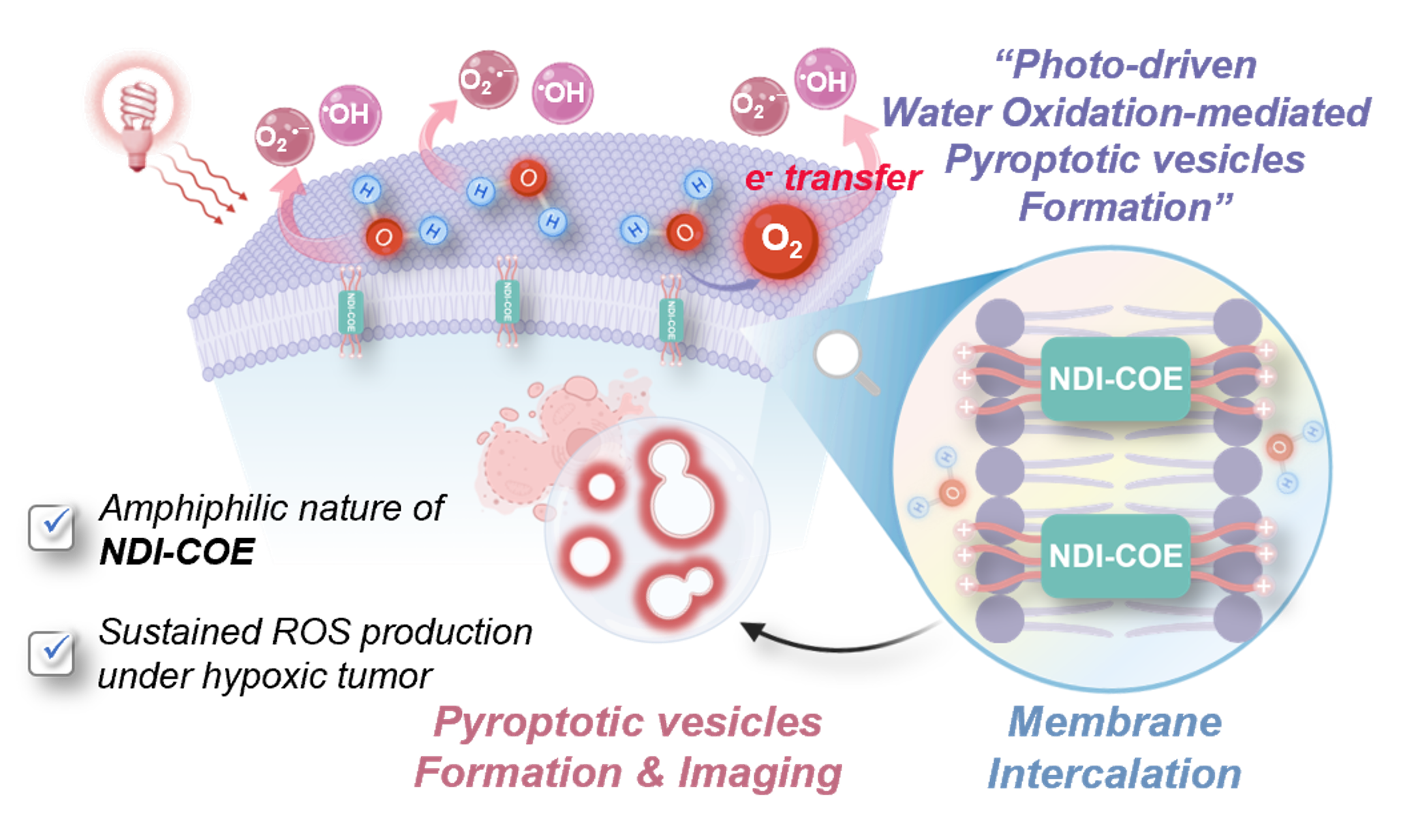
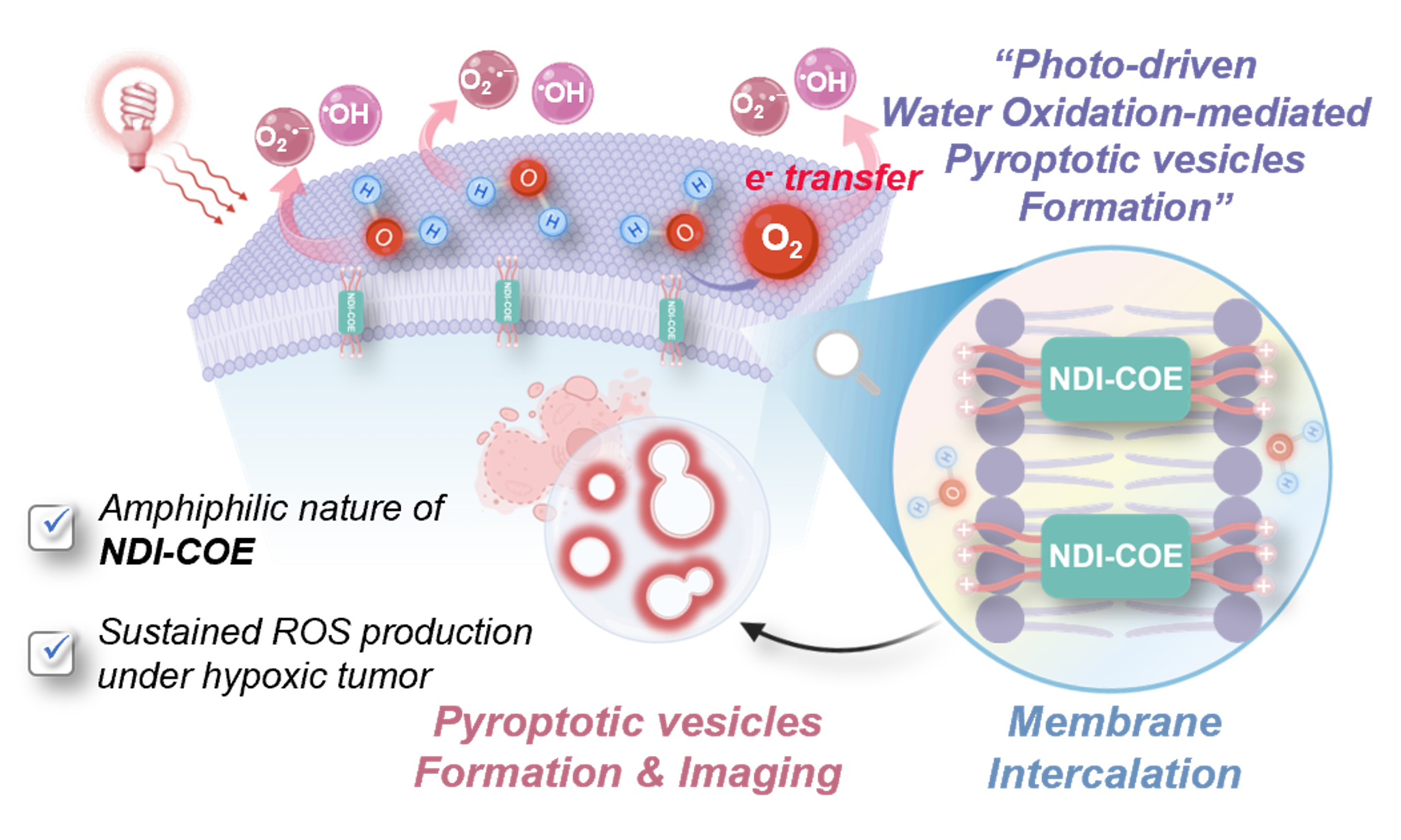
Photo-driven redox chemistry based on water oxidation offers a promising oxygen-independent strategy for hypoxia-restricted phototherapies. However, the photochemical performance of recent approaches relies on aggregation state, formulation stability, or microenvironment, which limits mechanistic transparency and precise control over proximal photochemical activation. Here we report a molecularly defined, membrane-anchored conjugated oligoelectrolyte (NDI–COE) that integrates an electron deficient naphthalene diimide (NDI) acceptor, an 3,4-ethylenedioxythiophene (EDOT)-incorporated π-conjugated backbone, and amphiphilic ionic side chains. This design enables stable insertion into lipid bilayers and efficient photoinduced charge separation at the water–membrane interface. Upon irradiation, membrane-bound NDI–COE oxidizes interfacial water to generate O2˙⁻and •OH, producing potent cytotoxicity even under hypoxia. Beyond ROS production, NDI–COE activates pyroptosis via the caspase-3/GSDME pathway and promotes the biogenesis of nanoscale pyroptotic vesicles. Notably, membrane engagement enhances the fluorescence of NDI–COE, enabling direct, real-time visualization of vesicle emergence and trafficking. By co-localizing oxygen-independent catalysis with an intrinsic optical readout at membranes, this work establishes a theranostic framework for hypoxia-resistant phototherapy and provides a practical handle to monitor pyroptotic vesicle formation for downstream immunotherapeutic applications.